Puffin Life
Mukesh Kumar
| 22-04-2026
 · Animal Team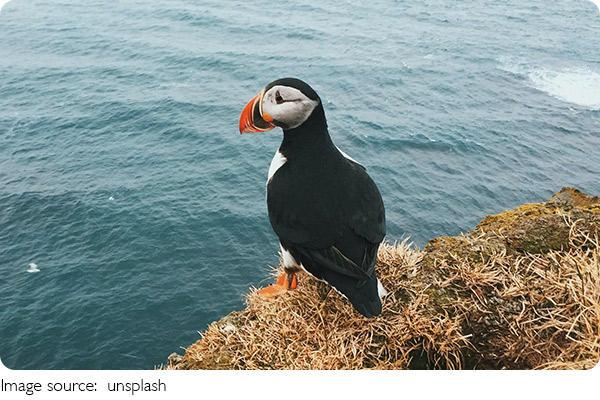
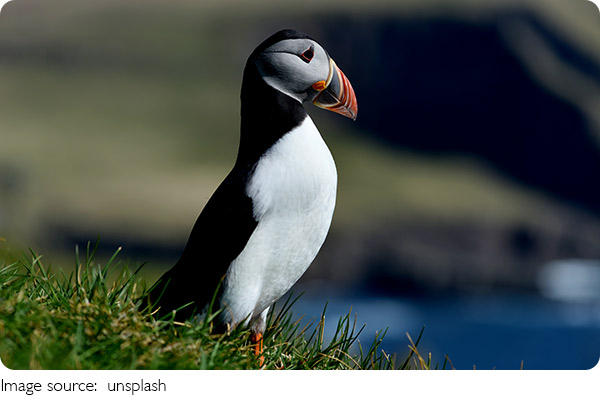
At first glance, the Atlantic Puffin looks almost unreal. Its beak is bright and layered with orange, yellow, and hints of blue, sharply contrasting with its black-and-white body.
The eyes are outlined with a soft triangular marking, giving it an expressive, almost thoughtful look.
But this striking appearance is not permanent. Outside the breeding season, the beak becomes smaller and duller, shedding its colorful outer layer. What seems like a permanent feature is actually a seasonal transformation, closely tied to the bird's life cycle.
Built for Two Worlds
The Atlantic Puffin is both an efficient flyer and an excellent swimmer, though it looks slightly awkward on land. Its short wings beat rapidly—up to 400 times per minute—allowing it to stay airborne despite a compact body.
Underwater, those same wings act like fins. Puffins “fly” through the water, chasing small fish with precision. They can dive to depths of around 60 meters and stay submerged long enough to hunt effectively.
This dual ability makes them perfectly adapted to life between ocean and sky.
Hunting with Precision
What truly sets puffins apart is how they carry food. Instead of bringing back one fish at a time, they can hold multiple small fish in their beak simultaneously.
1. A specialized tongue and spines on the upper beak help grip fish
2. They can stack fish sideways without losing earlier catches
3. A single trip may return with 5–10 fish at once
This efficiency is critical during nesting periods, when feeding young requires constant trips between sea and shore.
Life Underground
Unlike many seabirds that nest on open ledges, puffins prefer burrows. They dig tunnels into soft soil or grass-covered cliffs, creating a hidden chamber at the end.
These burrows can reach up to one meter in length, providing protection from weather and predators. Inside, a single egg is laid, and both parents take turns incubating and feeding the chick.
The nesting areas often appear calm from a distance, but beneath the surface lies a network of tunnels filled with activity.
Social but Structured
Puffins live in large colonies that can number in the thousands. Despite this density, there is a clear sense of order. Each pair maintains its own burrow, and interactions follow recognizable patterns.
They communicate through low growling sounds and body movements, especially during courtship. One common behavior is “billing,” where two puffins gently tap their beaks together. This action helps reinforce pair bonds.
Even in crowded colonies, these small rituals maintain structure and stability.
Challenges in a Changing Ocean
While puffins are resilient, they are sensitive to changes in ocean conditions. Their survival depends heavily on the availability of small fish such as sand eels.
Shifts in water temperature can affect fish populations, which in turn impacts puffin feeding success. When food becomes scarce, chicks may not receive enough nourishment to survive.
Conservation efforts now focus on monitoring colonies and protecting feeding grounds to ensure stable populations.
Final Reflection
The Atlantic Puffin is more than a colorful seabird—it is a finely tuned system of adaptations shaped by a demanding environment. From its seasonal beak changes to its underwater hunting technique, every detail serves a purpose.
Seen up close, it is not just visually striking, but deeply efficient. And in that balance between charm and function, the puffin reveals something essential about life along the ocean's edge—where survival depends on precision, timing, and quiet resilience.

