Trees That Breathe At Night

Finnegan Flynn
| 15-10-2026
 · Nature Team
As temperatures rise and droughts become more frequent, scientists are searching for ways to help plants survive with less water. Some tropical trees may already hold part of the answer.
Researchers at the University of Vienna have discovered how certain Clusia trees evolved an unusual form of photosynthesis that allows them to absorb carbon dioxide at night while conserving moisture during the day.
Published in Nature Communications, the study reveals how millions of years of genetic changes produced different water-saving strategies within a single group of tropical trees.

A Photosynthesis Mystery
Most plants absorb carbon dioxide through tiny pores called stomata, which usually open during daylight. However, these openings also allow water to escape through evaporation.
For plants growing in dry conditions, this creates a difficult balance between capturing carbon dioxide and conserving moisture.
Some tropical trees solve the problem by opening their stomata at night, when temperatures are generally cooler and evaporation is reduced.
They store the absorbed carbon dioxide in the form of malic acid, releasing it internally during daylight for photosynthesis. This process is known as crassulacean acid metabolism, or CAM.
A Discovery With Deep Roots
The unusual behaviour of Clusia trees first attracted scientific attention more than two centuries ago. Around 1800, naturalist Alexander von Humboldt observed that a tropical tree leaf submerged in water failed to release the oxygen bubbles he expected during daylight.
Scientists now understand that CAM plants can keep their stomata closed during the day while continuing to use stored carbon dioxide for photosynthesis.
However, precisely how this ability evolved among different Clusia species remained unclear.
Three Trees, Different Strategies
To investigate, researchers compared the genomes of three species: Clusia rosea, Clusia minor and Clusia major. They also examined how the trees responded to changing water availability under near-natural greenhouse conditions. The results revealed striking differences.
Clusia rosea uses a strong form of CAM, storing substantial amounts of carbon dioxide overnight. Clusia minor activates the process mainly when environmental conditions become stressful. Meanwhile, Clusia major combines conventional daytime carbon dioxide uptake with CAM, creating a flexible hybrid strategy. These differences demonstrate how closely related trees can develop distinct responses to water shortages.
How Ancient Genes Changed
The researchers discovered that all three species experienced ancient genome duplication events, leaving their ancestors with additional copies of genetic material.
Over millions of years, these enlarged genomes underwent extensive reorganisation. Some duplicated genes disappeared, others became inactive, and certain genes developed new functions. Lead author Hannes Kramml explained that this evolutionary reshuffling affected genes involved in storing carbon dioxide at night.
Research leader Professor Wolfram Weckwerth added that the extensive reorganisation of duplicated genomes helped explain why Clusia species developed such varied photosynthetic strategies.
The findings suggest that CAM evolved through multiple genetic changes rather than one simple evolutionary event.
Could This Help Future Crops?
CAM plants can use water more efficiently than plants relying entirely on conventional photosynthesis. Understanding the genes and metabolic processes behind this advantage could eventually help researchers develop crops better suited to dry environments.
However, transferring these complex mechanisms into agricultural plants would require substantial additional research. The study examined tropical trees rather than testing genetically modified crops, so practical farming applications remain a long-term possibility.
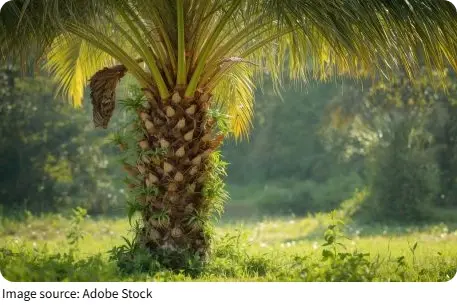
A Lesson From Nature
The findings reveal how evolutionary flexibility can help plants adapt to challenging environments. By understanding how tropical trees conserve water while maintaining photosynthesis, scientists may uncover new approaches to improving agricultural resilience.
As climate change increases pressure on global food production, these remarkable trees offer valuable clues about how plants survive when water becomes scarce.