Safe Group Motorcycle Rides

Amit Sharma
| 24-09-2026
 · Vehicle Team
Group motorcycle riding requires more coordination than riding alone.
Every participant needs to understand the route, formation, communication methods, and responsibilities before departure.
A clear plan allows the group to respond consistently to changing road conditions and prevents individual riders from making conflicting decisions.
Pre-Ride Planning
Before starting, hold a short briefing covering the route, planned stops, fuel breaks, hand signals, and regrouping procedures. Riders should also know what to do if someone becomes separated or experiences a mechanical or medical problem.
Assign a lead rider to manage navigation and establish a suitable pace. A sweep rider should remain at the rear and monitor the group. The pace should accommodate the experience and abilities of the participants rather than forcing less experienced riders to keep up.
Staggered Formation
On straight roads with good visibility, a staggered formation provides useful space between motorcycles. The lead rider generally occupies the left portion of the lane, while the second rider uses the right portion. The alternating pattern continues through the group.
Maintain sufficient following distance for braking and evasive movement. Avoid riding directly beside another motorcycle because it limits maneuvering space.
Groups of approximately five to seven riders are generally easier to coordinate. Larger groups can be divided into smaller units, with each unit having its own lead and sweep rider.

Curves and Limited Visibility
A staggered formation is not suitable for every road situation. Riders should move into single file before curves, winding sections, areas with restricted visibility, or conditions that require additional maneuvering room.
Maintain at least a two-second following distance when riding single file. Each rider should select a safe speed and cornering line based on their ability, motorcycle, visibility, road surface, and available traction.
Do not automatically copy the speed or line of the motorcycle ahead. Once the road becomes straight and visibility improves, the group can return to a staggered formation when appropriate.
Hand Signal Communication
All participants should review the agreed hand signals before departure. Common signals include:
- Left turn: Extend the left arm straight out.
- Right turn: Extend the left arm with the forearm raised.
- Slow down: Extend the arm downward with the palm facing down.
- Speed up: Extend the arm outward with the palm facing up.
- Hazard on the left: Point toward it with the left hand.
- Hazard on the right: Point toward it with the right foot.
- Stop: Extend the left arm downward with the palm facing backward.
Consistent signals allow important information to travel through the group without requiring verbal communication while riding.
Passing and Group Awareness
Passing requires individual judgment. Before overtaking another vehicle, each rider should assess traffic, visibility, available space, and whether the maneuver is legal. Never follow another motorcycle into a passing area without independently confirming that the path is clear.
Riders should periodically check their mirrors and remain aware of the motorcycle behind them. If a rider falls significantly behind, reducing speed when appropriate can help maintain the group without encouraging an unsafe pace.
The group should also have a clear regrouping plan. If riders become separated, they should follow the agreed procedure instead of attempting to catch up by traveling beyond a safe speed.
Rider Responsibilities
Good group riding depends on every participant, not only the lead and sweep riders. Each motorcyclist remains responsible for maintaining control, selecting an appropriate speed, monitoring surrounding traffic, and leaving enough space to react to hazards.
Riders should also avoid sudden or unnecessary changes in speed or position. Predictable movements make it easier for others to anticipate what is happening and maintain a stable formation.
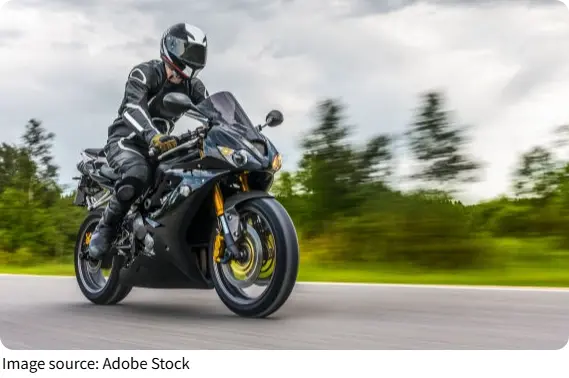
A successful group motorcycle ride combines preparation with disciplined riding habits. A clear briefing establishes expectations, while appropriate formations, adequate spacing, reliable signals, and responsible passing procedures help the group remain organized.
The most effective group rides are not about maintaining a fixed speed or formation at all times. They are about adapting to road conditions while giving every rider enough space, time, and information to make safe decisions.