AWD Is Taking Over?

Santosh Jha
| 25-09-2026
 · Vehicle Team
Walk into a new-car showroom today, and it can feel surprisingly difficult to find a crossover without all-wheel drive. Models that once commonly relied on front-wheel drive are increasingly offered with power sent to all four wheels.
Buyers play a major role, but consumer demand is only part of the story. Vehicle design, fuel-economy rules, changing technology, and the growing popularity of electric vehicles have all helped push AWD into the mainstream.
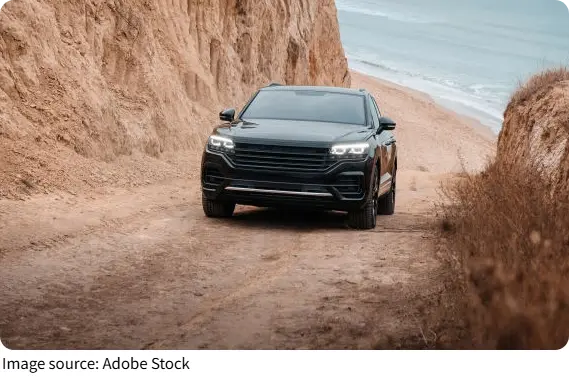
Crossovers Changed the Market
The biggest reason AWD is so visible today is the rise of the crossover. These vehicles combine some of the practicality of an SUV with the everyday driving characteristics of a passenger car, making them popular choices for families and commuters.
As crossover sales grew, automakers began offering more versions with AWD. The system provides additional traction when road conditions become slippery or when a vehicle travels over loose surfaces. For shoppers who regularly encounter rain, snow, gravel, or steep roads, that extra traction can be appealing.
AWD has also become increasingly accessible. As production volumes increased and manufacturers developed more compact systems, the technology became easier to offer across a wider range of vehicles.
Buyers Have Helped Push AWD Forward
Consumer preference has become an important part of the trend. Many drivers view AWD as a useful feature for dealing with unpredictable weather and difficult road conditions.
There is a psychological element, too. Having power available at four wheels can make a vehicle feel more capable, particularly when pulling away on a slippery surface. For many buyers, that sense of confidence is valuable even if AWD is rarely required during normal driving.
However, AWD has an important limitation that shoppers should understand. It can help a vehicle maintain traction while accelerating, but it does not automatically shorten stopping distances. Tires remain critical, particularly in cold or snowy conditions. A vehicle equipped with AWD still benefits from tires appropriate for the climate and road surface.
Fuel-Economy Rules Also Matter
There is another factor that is less obvious from behind the steering wheel: how vehicles are classified for regulatory purposes.In the U.S., manufacturers must meet fleet-wide fuel-economy requirements. Vehicle classifications can affect how those requirements are applied, and many crossovers fall into categories that receive different treatment from conventional passenger cars.
That creates an incentive for automakers to carefully consider how a vehicle is configured and classified. Adding AWD can increase weight and mechanical complexity, which normally works against efficiency. Yet the overall regulatory calculation can sometimes make the configuration attractive from a manufacturer's perspective.
This does not mean automakers add AWD solely to work around fuel-economy requirements. Consumer demand, product positioning, performance, and vehicle packaging all matter. But regulations are another piece of a much larger puzzle.
Electric Cars Made AWD Easier
The growth of electric vehicles has added another reason for AWD to become more common. A conventional gasoline-powered vehicle generally needs additional mechanical hardware to send power to both axles.
An electric vehicle can take a different approach. Instead of relying entirely on mechanical components to distribute power, manufacturers can use separate electric motors to drive different axles. This can make AWD packaging relatively straightforward in certain EV designs.
Not every electric vehicle has AWD, particularly more affordable models with a single motor. Still, the flexibility of electric powertrains has made multiple-motor configurations easier to develop.

Is AWD Always Worth Choosing?
For some drivers, AWD can be a genuinely useful feature. It can improve traction during acceleration and provide additional capability on slippery or loose surfaces. It can also make sense for drivers who regularly travel through challenging conditions.
For others, the advantages may be less significant. AWD systems can add weight, complexity, and cost, and they may reduce efficiency compared with a comparable two-wheel-drive configuration.
The right choice therefore depends on how the vehicle will actually be used. Someone who primarily drives on well-maintained roads in mild conditions may have little need for AWD. Another driver who frequently encounters snow, steep roads, or unpaved surfaces may consider it worthwhile.
The explosion of AWD-equipped new cars is not the result of a single trend. Crossover popularity created a huge market for the technology, buyers increasingly expected it, vehicle regulations influenced product decisions, and electric powertrains made multi-motor AWD easier to package.
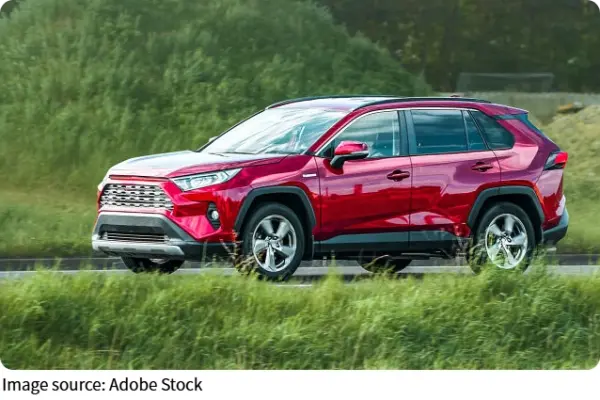
For shoppers, the important question is not simply whether a vehicle has AWD. It is whether the additional traction, cost, weight, and complexity make sense for the roads and conditions that vehicle will regularly encounter. Sometimes four driven wheels are genuinely useful. Sometimes good tires and a simpler drivetrain are all that is needed.