Mountain Driving Safety

Ravish Kumar
| 25-09-2026
 · Vehicle Team
Mountain roads require a driving approach that matches the terrain. Steep gradients, tight curves, narrow lanes, uneven surfaces, and changing weather can alter how a vehicle accelerates, brakes, and steers.
Safe mountain driving starts with proper preparation and continues with smooth inputs, appropriate speed, good observation, and careful use of the vehicle’s systems.
Prepare the Vehicle
Inspect the tires, brakes, steering, lights, windshield wipers, coolant level, and other essential systems before a mountain journey. Tires should have adequate tread and the recommended inflation pressure, while the braking system should be in good working condition.
Secure luggage and equipment so it cannot shift during the journey or obstruct visibility. For remote routes, useful supplies can include a spare tire, basic tools, water, a flashlight, suitable clothing, and reliable navigation information.
Handle Uphill Sections
Steep climbs place additional demands on the engine and drivetrain. Maintain a steady speed appropriate for the gradient and avoid unnecessary acceleration.
If the vehicle struggles to maintain momentum, select a lower gear when appropriate and permitted by the vehicle manufacturer's instructions. This can provide better control and reduce frequent gear changes.
Control Downhill Sections
Descending requires careful speed management because gravity naturally increases the vehicle's speed. Select an appropriate lower gear before a prolonged descent when suitable for the vehicle, allowing engine braking to contribute to speed control.
Avoid sustained heavy braking because it can generate significant heat. Instead, maintain a manageable speed and apply the brakes smoothly when required. Reduce speed before entering sharper sections rather than relying on heavy braking while cornering.
Approach Curves Properly
Mountain curves can restrict your view of the road ahead. Reduce speed before entering a sharp or blind curve and maintain your lane position.
Look as far through the curve as visibility allows while remaining alert to approaching traffic. Avoid overtaking when the road does not provide adequate visibility and space. On narrow sections, be prepared to slow or stop where necessary to allow traffic to pass safely.
Adapt to Road and Weather Conditions
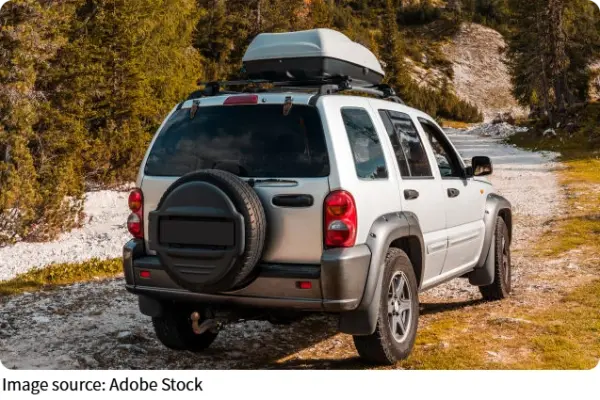
Conditions can change quickly at higher elevations. Rain, fog, snow, ice, strong winds, and loose surfaces can affect visibility and traction.
Adjust your speed and driving inputs as conditions change. Use gentle steering, acceleration, and braking on surfaces with reduced grip. If visibility becomes severely restricted or conditions are unsuitable for the vehicle, stop at a safe location when possible and continue when it is appropriate to do so.
Use Vehicle Assistance Systems Correctly
Four-wheel drive and all-wheel drive can improve traction in appropriate conditions, but they do not replace sensible speed management and do not guarantee shorter stopping distances.
Hill-descent control, traction settings, and other assistance features should be used according to the vehicle manufacturer's instructions. Knowing how these systems operate before reaching a demanding section allows them to be used more effectively.
Maintain a Safe Gap
Leave sufficient space between your vehicle and the one ahead. A larger gap provides additional time to respond to sudden changes in traffic or road conditions.
Increase the gap around blind curves and over crests where visibility is limited. On narrow roads, remain prepared for vehicles approaching from the opposite direction.
Stay Focused on Long Journeys
Repeated curves, steep gradients, and elevation changes can require continuous concentration. On longer journeys, use designated stopping areas for rest and vehicle checks.
If your attention begins to decline, take a break before continuing. Maintaining concentration is an important part of managing a demanding mountain route.
Reconsider the Route When Necessary
Mountain conditions can change during a journey. Weather, visibility, traffic, and surface conditions may make a route more demanding than expected.
If a section is unsuitable for the vehicle or beyond the driver's experience, choose a safer route when one is available. A flexible approach allows the journey to continue without placing unnecessary demands on the driver or vehicle.
Drive Smoothly and Deliberately
Safe mountain driving is built on preparation, observation, and controlled vehicle inputs. Choose a suitable speed before demanding sections, use lower gears appropriately, manage descents carefully, and adjust your technique to the conditions.
The key is to anticipate the road rather than react to it: prepare early, steer smoothly, maintain appropriate space, and keep the vehicle within a comfortable level of control throughout the journey.