Desert SUV Driving Guide

Caroll Alvarado
| 26-09-2026
 · Vehicle Team
Desert roads offer memorable scenery, but conditions can change considerably between paved highways, maintained gravel roads, sandy sections, and uneven terrain.
A compact SUV can be appropriate for many established routes when its capabilities match the road and the journey is properly planned.
A successful desert drive begins before the vehicle moves. Route research, vehicle preparation, essential supplies, and flexible planning all contribute to a smoother journey.
Select the Right Route
A compact SUV does not automatically have four-wheel drive, increased ground clearance, or equipment designed for demanding terrain. Examine the planned route and identify its surface type, access requirements, and vehicle restrictions.
Check current road conditions, access information, seasonal limitations, and available services before departure. Choose established routes that fall within the vehicle's specified capabilities.
For rental vehicles, review the agreement carefully, particularly any restrictions involving unpaved or remote roads.

Prepare the SUV
Begin with the tires. Check their pressure when cold and adjust it according to the vehicle manufacturer's specifications. Inspect the tread and sidewalls for visible damage, and verify that the spare tire is properly inflated when one is provided.
Review essential systems and fluids in accordance with the owner's manual. The cooling system, engine oil, battery, lights, wipers, windshield-washer fluid, and air-conditioning system deserve particular attention before a long desert journey.
High temperatures can increase demands on both the vehicle and its occupants. Address warning indicators, unusual temperature readings, fluid leaks, or tire concerns before traveling into an area where assistance may be limited.
Pack Essential Supplies
Carry sufficient drinking water for everyone in the vehicle, plus an additional supply for delays or changes in plans. Requirements vary according to temperature, distance, physical activity, and access to reliable supplies.
Other useful items include food, sun protection, appropriate clothing, a first-aid kit, a flashlight, and basic vehicle equipment. Secure items properly so they remain organized throughout the journey.
Navigation should also have a backup. An offline map or paper map can be useful where mobile coverage is limited. Identify fuel or charging points in advance and plan the route around available services.
Adapt to Road Conditions
Speed should reflect the road surface, visibility, traffic, and surrounding environment. Maintain sufficient control and stopping distance for bends, uneven sections, loose surfaces, and narrow roads.
On gravel and other loose surfaces, use smooth steering, acceleration, and braking. Avoid abrupt inputs that can reduce vehicle stability or traction.
When stopping to take photographs, check directions, or enjoy the scenery, use an appropriate designated area whenever possible. Choose stopping locations that provide adequate space and visibility.
During extended climbs or periods of high heat, monitor the vehicle's temperature display and warning indicators. If conditions change, adjust the route or schedule rather than remaining committed to the original plan.
Prepare for Remote Sections
Remote desert travel requires additional planning because fuel, charging facilities, services, and communication may be limited.
Share the planned route, destination, vehicle details, and expected return time with someone you trust. Allow additional time for navigation, sightseeing, slower sections, and unexpected delays.
Before entering a remote area, confirm that the vehicle has sufficient fuel or charge for the planned journey and reasonable contingencies.
If the vehicle becomes disabled, remaining with it may be the most practical option when walking for assistance is unsuitable. Conserve water and essential supplies, and contact assistance whenever communication is available.
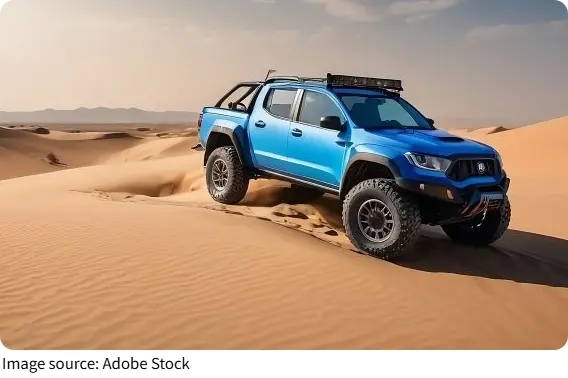
Match the Journey to the SUV
The suitability of a compact SUV for desert travel depends on its actual specifications and the characteristics of the route. Body style alone does not determine whether a vehicle is appropriate for a particular surface or terrain.
The best preparation combines route selection, vehicle inspection, essential supplies, and condition-aware driving. By keeping the journey within the SUV's intended capabilities, drivers can explore scenic desert roads with greater confidence, organization, and control.