Penguin Huddle Secret
Nolan O'Connor
| 07-08-2026
 · Animal Team
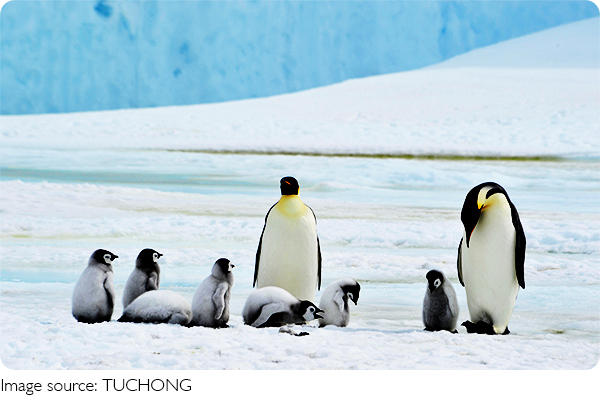
Hi, Readers! Out on the Antarctic ice, emperor penguins endure some of the harshest cold on Earth, yet they have a striking way to stay warm together.
Rather than letting those on the outside remain exposed, the group forms a tight huddle and slowly rotates.
This collective movement allows individuals to take turns at the colder edge and the warmer center, helping the colony conserve heat while facing brutal winter conditions.
Emperor penguins are the tallest and heaviest penguin species, and they breed during the Antarctic winter. That timing creates a serious challenge. Air temperatures can drop extremely low, and strong winds make heat loss even worse.
A single bird standing alone would spend far more energy trying to maintain body temperature. By clustering closely, penguins reduce exposed surface area and create a more stable pocket of warmer air within the group.
Why huddling works
The huddle is not a random crowd. It is a practical heat-saving system. Penguins press close to one another so body heat is shared across the group. Individuals near the center benefit from milder conditions, while those along the edge face the strongest cold and wind.
If positions never changed, the outer birds would face much greater strain. The rotating pattern solves that problem by distributing exposure more evenly. Researchers observing emperor penguins have described this movement as gradual and coordinated rather than chaotic.
Small shifts ripple through the huddle, and over time birds from the perimeter move inward while others move out. This creates a kind of living circulation. The result is not just warmth, but fairness. Each penguin gets access to the shelter of the center for part of the time.
How the rotation happens
The rotation is subtle. Penguins do not simply rush from one spot to another. Instead, the group makes tiny steps and adjustments, often in response to wind and temperature. These small motions can reorganize the whole cluster. The huddle may loosen slightly and tighten again, allowing positions to change without breaking the protective formation.
This behavior is especially important because emperor penguins fast for long periods during breeding. Conserving energy is essential. Males incubate the egg on their feet under a brood pouch while enduring severe cold.
In that setting, wasting heat could threaten survival. The rotating huddle helps lower energy demands at a time when food is unavailable, and endurance matters most.
More than simple crowding
What makes this behavior so remarkable is that it functions as a group strategy, not just an individual response. The penguins do not need a leader directing traffic. Their local adjustments create an effective system on their own. In dense formations, temperatures within the huddle can become far higher than the air outside, showing how powerful collective heat retention can be.
This warming method also reflects the emperor penguin's broader adaptation to Antarctic life. Their bodies are built for cold, with insulating feathers and substantial energy reserves, but anatomy alone is not enough in such conditions.
Social behavior becomes part of survival. The huddle is one of the clearest examples of cooperation in the natural world, where simple repeated actions create a major benefit for the entire colony.
The emperor penguin's rotating huddle is nature's masterclass in teamwork. Without leaders or plans, these birds execute a flawless system of shared sacrifice and mutual benefit. Each individual endures the brutal outer edge so that others may rest in the center's warmth—and then they swap.
It's a quiet, dignified dance of survival that speaks to something universal: we endure more when we endure together. In a world of extremes, these flightless birds remind us that cooperation isn't just kind—it's sometimes the only way forward.