French Toast in Minutes!

Chris Isidore
| 07-08-2026
 · Food Team
Hi Lykkers! There are mornings when I want breakfast to feel a little special without spending forever in the kitchen. French toast is one of my favorite answers because it uses simple ingredients, cooks quickly, and turns ordinary slices of bread into something warm, golden, buttery, and comforting.
The secret to really good French toast is getting the texture right. The bread should absorb plenty of the egg mixture without completely falling apart, while the outside becomes beautifully browned in the pan. A little cinnamon, nutmeg, vanilla, and sugar gives every bite a cozy flavor, and serving it with butter and maple syrup makes it even better.
Ingredients
For the French Toast:
- 8 slices white bread, about 1/2-inch thick
- 6 large eggs
- 4 tablespoons granulated sugar, plus extra for sprinkling
- 1 pinch kosher salt
- 1 pinch ground cinnamon
- 1 pinch freshly grated nutmeg
- 1/4 teaspoon vanilla extract
- 2 cups whole milk
- 4 tablespoons unsalted butter, for cooking
- Additional butter, for serving
- Maple syrup, for serving

Step-by-Step Instructions
Step 1: Prepare the Bread
- Start by placing a wire rack over a rimmed baking sheet. Preheat the oven to 200°F (93°C).
- If your white bread is fresh and particularly moist, place the slices in a single layer on the rack. Let them warm and dry slightly in the oven for about 10 minutes, turning them once halfway through.
- The goal is not to make toast. You simply want the surface of the bread to become slightly drier so it can absorb the custard without becoming overly fragile.
- If your bread is already a little dry or firm, you can skip this step.
Step 2: Make the Egg Mixture
While the bread is warming, prepare the custard.
In a large mixing bowl, whisk together:
- 6 large eggs
- 4 tablespoons sugar
- 1 pinch kosher salt
- 1 pinch ground cinnamon
- 1 pinch freshly grated nutmeg
- 1/4 teaspoon vanilla extract
- Whisk until the eggs are fully blended and the sugar is distributed throughout the mixture.
- Pour in 2 cups of whole milk and whisk again until everything is evenly combined.
- Take a moment to make sure there are no obvious streaks of egg white remaining. A well-mixed custard gives the French toast a more consistent flavor and texture from edge to center.
Step 3: Heat the Skillet
- Place a large non-stick or cast-iron skillet over medium heat.
- Add about 1 tablespoon of unsalted butter and let it melt. Swirl the pan gently so the butter coats the cooking surface.
- Allow the butter to foam and then subside before adding the bread. You want the skillet hot enough to brown the slices, but not so hot that the butter burns before the French toast has time to cook.
Step 4: Soak the Bread
- Dip 2 slices of bread into the egg mixture.
- Turn each slice over so both sides are coated. Let the bread absorb enough of the custard to become saturated, but handle it gently so the slices do not break apart.
- Transfer the soaked bread directly to the hot skillet.
- Avoid soaking all eight slices at once. Working in small batches makes it easier to control how long each piece sits in the custard.
Step 5: Cook Until Golden Brown
- Cook the first two slices for about 3 minutes, occasionally swirling the skillet gently.
- Check the underside. Once it has developed a rich golden-brown color, sprinkle a little additional sugar over the uncooked top side.
- Carefully flip the French toast and continue cooking for another 3 minutes, again swirling the skillet occasionally.
- The second side should also become nicely browned and slightly crisp around the edges.
- If the bread is browning too quickly, lower the heat slightly. French toast needs enough time for the center to warm through without the outside becoming too dark.
Step 6: Keep the Cooked Slices Warm
- Once the first batch is ready, transfer the slices to the wire rack in the 200°F (93°C) oven.
- Arrange them in a single layer rather than stacking them. Keeping the slices on the rack helps prevent the bottoms from becoming soggy while you finish cooking the remaining batches.
- Repeat the process with the remaining bread and egg mixture. Add another tablespoon of butter to the skillet as needed so each batch has enough butter for cooking.
Step 7: Serve Warm
- When all of the French toast is cooked, serve it immediately while it is still warm.
- Add a small pat of butter on top and drizzle generously with maple syrup. The warm toast helps the butter soften and melt into the golden surface, while the maple syrup adds the perfect sweet finish.
Helpful Tips for Better French Toast
Use slightly dry bread:
Very fresh bread can become too soft after soaking. Lightly drying it first makes it easier to handle.
Do not rush the soaking:
Give both sides enough time to absorb the custard, but avoid leaving the slices submerged for too long.
Watch the heat:
Medium heat is a good starting point. If the bread becomes dark before the center is properly warmed, reduce the temperature.
Cook in small batches:
Two slices at a time gives you more control and makes flipping easier.
Keep finished slices warm:
The low oven temperature lets you cook the entire batch before serving without letting the first slices become cold.
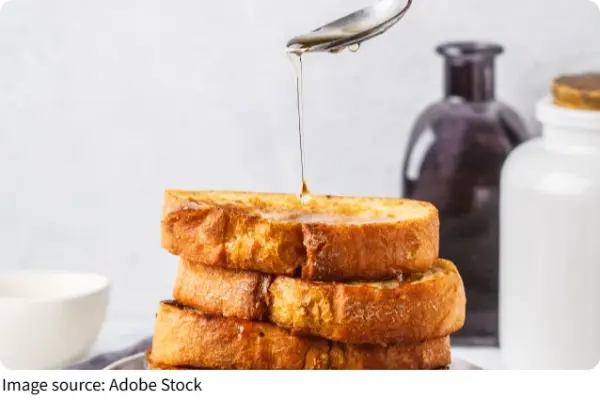
This French toast is proof that a satisfying breakfast does not have to involve complicated ingredients or a long preparation process. The combination of soft, custardy bread, golden-brown edges, warm spices, melted butter, and maple syrup makes it feel much more indulgent than the simple ingredient list suggests. Serve it fresh from the skillet for a relaxed weekend breakfast, or make it when you simply want an easy morning meal that feels a little more comforting than ordinary toast.