Orange Striped Secret

Chris Isidore
| 14-04-2026
 · Animal Team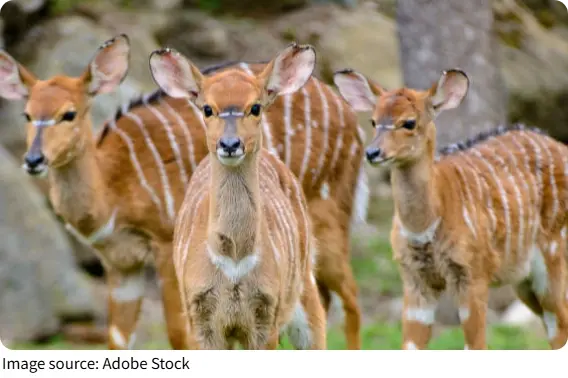
Have you ever heard of the Bongo antelope? These striking creatures, with their vivid orange coats and white stripes, often go unnoticed in the dense forests of Central and West Africa.
However, the Tragelaphus angasii, more commonly known as the bongo, is a remarkable animal with some truly fascinating traits. While the bongo may not always make it to the top of the list of Africa's famous wildlife, its unique characteristics and behaviors are well worth exploring.
1. Stunning Appearance
One of the first things you'll notice about the bongo is its appearance. With its rich reddish-brown coat, adorned with contrasting white stripes, it's hard to miss these animals in the wild. But beyond the aesthetics, there's a lot more to the bongo's appearance that makes it stand out.
Camouflage for Protection
The bongo's striking markings are not just for show—they also serve a practical purpose. The white stripes that run across their bodies help them blend into the forested environment where they live. The vertical lines mimic the play of light and shadow in the forest, providing an effective camouflage against predators.
The Large, Spiraled Horns
Male bongos are equipped with impressive, spiraled horns that can grow up to 35 inches long. These horns are used during fights with other males over territory or mates. The males use their horns to push, twist, and jab during these intense battles, showcasing not only strength but also agility.
2. The Silent Forest Dwellers
Bongos are primarily found in dense forests, where they have adapted to a secretive, solitary lifestyle. While they aren't completely elusive, their shy nature makes them harder to spot, and they are often more active during dawn and dusk.
Solitary Behavior
Unlike many other antelopes that prefer large herds, bongos tend to live alone or in very small groups. Males are typically solitary, while females and their calves might occasionally form small family units. Their solitary habits make them more difficult to track, even for researchers studying their movements.
Silent Communication
While some animals are known for their vocalizations, the bongo prefers quiet communication. They rely more on body language, such as posturing, to communicate with one another. The bongo's ability to remain silent is one of the reasons why these creatures are so difficult to detect in the wild.
3. A Strong Sense of Smell and Hearing
Bongos have highly developed senses of smell and hearing, which are crucial for survival in their dense forest habitats. Their acute senses help them detect predators long before they are spotted.
Smell
A bongo's sense of smell is particularly important for identifying food sources and potential danger. They can detect the presence of predators, such as leopards or lions, from a significant distance, and this helps them avoid confrontation.
Hearing
Their hearing is finely tuned as well. The bongo's large, mobile ears are capable of picking up even the faintest sounds in the forest. This allows them to stay alert to any movements nearby, especially in the dense, noisy forest environment.
4. Diet and Foraging
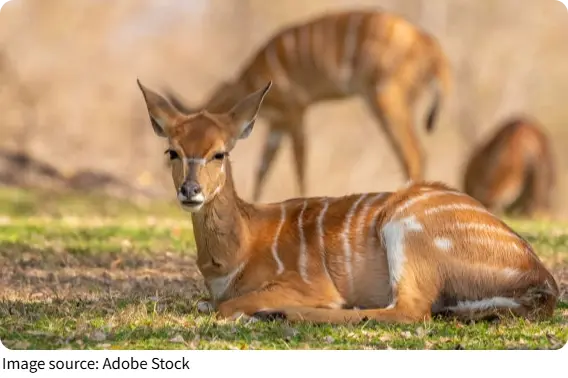
Bongos are herbivores, and their diet consists mostly of leaves, fruit, and other vegetation found in the forest. They are known to be selective feeders, often choosing particular plants and parts of plants to consume.
High-Quality Leaves
Bongos tend to prefer young, tender leaves, which are more nutritious and easier to digest. Their ability to select high-quality leaves gives them an advantage in maintaining a balanced diet in their environment.
A Nocturnal Feast
Although they are not strictly nocturnal, bongos are most active during the night when it is cooler and predators are less likely to be active. During these hours, they forage for food and move through the forest quietly, avoiding the heat of the day.
The Mystery of the Bongo
The bongo is one of Africa's most beautiful and elusive animals, but its secretive nature means that many people rarely get the chance to see it in the wild. With its unique markings, solitary habits, and impressive physical traits, the bongo has earned its place as one of the most fascinating creatures of the forest.
While conservation efforts are in place to protect these creatures, the bongo's numbers are still declining due to habitat loss and poaching. We can only hope that this remarkable species continues to thrive in its natural home, and that future generations will be able to witness their beauty in the wild.

