Lunar Missions

Santosh Jha
| 24-03-2026
 · Astronomy Team
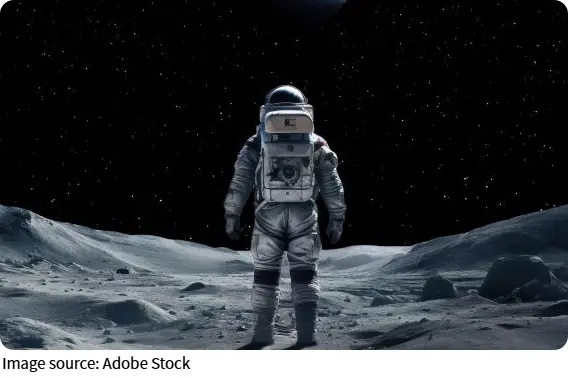
Imagine stepping outside on a dusty, desolate landscape where the sky is always pitch black.
You look around and realize—it's the Moon, and you're one of the first humans to set foot on its surface.
As ambitious as it sounds, this isn't just a science fiction dream. In fact, plans for human habitation on the Moon are already in the works.
The Rush to Explore the Moon
Lunar exploration isn't a new idea, but it's seen a resurgence in recent years. The first lunar mission in 1969 was a monumental achievement, marking a significant milestone in space exploration. However, after that, the interest in the Moon dwindled, and missions to our celestial neighbor became less frequent. Fast forward to today, and space agencies around the world are reigniting the drive to explore and colonize the Moon.
Artemis Program: NASA's Artemis mission aims to return humans to the Moon by 2024. This ambitious plan isn't just about visiting; it's about establishing a long-term human presence. The goal is to create a sustainable lunar base, a stepping stone for future missions to Mars.
Lunar Gateway: A key part of Artemis, this space station will orbit the Moon and serve as a hub for astronauts, providing critical infrastructure for deep-space exploration.
These projects are not just about the Moon's potential as a base for space exploration—they also open the door for new discoveries that could revolutionize our understanding of space and Earth.
The Challenges of Living on the Moon
While living on the Moon sounds exciting, it comes with a host of challenges. The environment on the Moon is incredibly harsh, and humans would need to adapt in ways we've never had to before. For one, the Moon has no atmosphere, which means temperatures can range from 260°F (127°C) during the day to -280°F (-173°C) at night. This extreme temperature fluctuation would pose a serious challenge to life support systems.
Radiation Exposure: Without Earth's protective atmosphere and magnetic field, astronauts would be exposed to high levels of radiation. To protect future lunar residents, habitats would need to be well shielded, potentially using materials like lunar regolith (moon dust) to create protective walls.
Limited Resources: Unlike Earth, the Moon doesn't have vast oceans or fertile soil. Any lunar base would need to rely on advanced technology to supply food, water, and oxygen, as well as recycling systems to make these resources last.
The Moon's lack of atmosphere also means no breathable air or weather to help with temperature control. That's where innovation comes in—engineers are already designing habitats that could either be built underground or covered by a thick layer of moon dust to protect against radiation and extreme temperatures.
Technological Solutions for Lunar Habitats
Building a sustainable habitat on the Moon will require cutting-edge technology and new ways of thinking about living in space. The idea of creating habitats that can withstand the harsh conditions of the Moon is no longer a distant dream; it's becoming a reality.
3D Printing: One promising technology is 3D printing. NASA is already testing the use of 3D printers to create structures using lunar soil, which would reduce the need for sending materials from Earth. In theory, lunar base structures could be printed on-site, using the Moon's natural resources.
Solar Power: The Moon's surface is bathed in constant sunlight, which means solar energy could be an effective power source. Solar panels placed on the Moon would generate electricity for habitats, life support systems, and other operations.
These technologies are critical for ensuring that lunar habitats can function without constant resupply missions from Earth.
The Role of Lunar Research for Human Survival
Living on the Moon isn't just about being able to survive—it's also about thriving. And to do that, we need to understand the long-term effects of living in a low-gravity environment, as well as the impact of space radiation on human health.
Space Medicine: Research will be crucial for ensuring that astronauts can remain healthy during extended missions. For instance, the low gravity on the Moon can cause muscle atrophy and skeletal loss, so astronauts will need to engage in daily physical exercises to counteract these effects.
Psychological Challenges: The isolation and confinement of living on the Moon will also test the mental resilience of astronauts. Maintaining their well-being will require careful attention to mental health, with regular communication with loved ones and other psychological support mechanisms.
It's not just about building a physical habitat—it's about creating a sustainable, livable environment where humans can not only survive, but thrive.
What's Next for Moon Colonization?
Looking ahead, the idea of living on the Moon is becoming increasingly plausible. As missions like Artemis and Gateway push forward, we're on the cusp of a new era in space exploration. But beyond just living there, the Moon could serve as a launchpad for further exploration of Mars and beyond. The lessons we learn on the Moon will shape how we approach human settlement on other planets.
Ultimately, the Moon isn't just a stepping stone for space exploration—it's a potential second home for humanity. Whether or not we'll see permanent lunar habitats in our lifetime remains uncertain, but the groundwork is being laid, and the excitement is palpable.
Who knows? In the future, the Moon could become the first true off-Earth colony, with humans setting up shop under the light of the stars, a constant reminder of how far we've come—and how much further we're willing to go.