Tomorrow’s Spaceships

Ravish Kumar
| 24-03-2026
 · Astronomy Team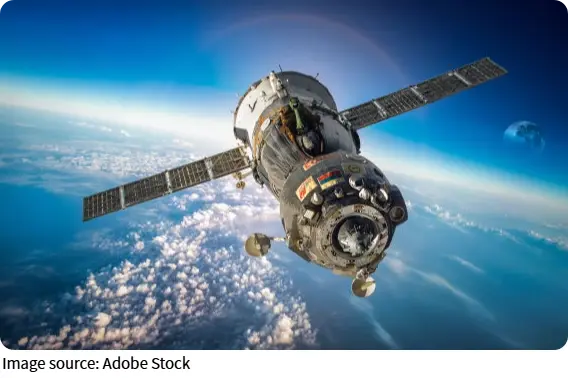
Floating above Earth, a spacecraft isn't just metal and fuel—it's a blend of science, engineering, and imagination.
The next generation of space vehicles promises not just to reach farther into space but to do it faster, safer, and more efficiently.
From propulsion breakthroughs to life-support innovations, designing future spacecraft is about anticipating the unknown while making space travel practical.
Innovative Propulsion Systems
Electric and ion drives
Nuclear propulsion
Solar sails
Traditional chemical rockets have limits: they're bulky, costly, and inefficient for long missions. Electric and ion propulsion systems, which use charged particles to generate propulsive force, allow spacecraft to travel further while using far less fuel.
Nuclear propulsion could cut interplanetary travel time dramatically, making missions to Mars or Jupiter more feasible. Solar sails, powered by sunlight, offer continuous propulsive force without consuming fuel, ideal for deep-space exploration.
Actionable example: Understanding ion propulsion can start at home—small ion thruster kits are available for educational use, helping students visualize how charged particles generate movement in a vacuum.
Advanced Materials for Spacecraft
Lightweight alloys
Heat-resistant composites
Radiation-shielding layers
Materials are as crucial as engines. Spacecraft must be lightweight for launch efficiency yet strong enough to withstand extreme conditions. Heat-resistant composites protect against friction during reentry, while radiation-shielding layers keep astronauts safe from cosmic rays. Advanced alloys also allow for more flexible and modular designs, which can reduce cost and increase mission adaptability.
Actionable example: Following research on materials like carbon fiber-reinforced polymers can give insight into how aerospace engineers select components for both strength and minimal weight.
Life Support and Sustainability
Closed-loop systems
Water and air recycling
Efficient energy management
Long-duration missions require sustainable life support. Closed-loop systems recycle water and air, reducing the need for frequent resupply. Efficient energy management ensures that solar panels and battery systems can support all onboard systems without interruption. Plants and algae may even be used to naturally purify air while producing oxygen, integrating biology into spacecraft design.
Actionable example: Home experiments with small hydroponic or aquaponic systems show how closed-loop water systems work, illustrating concepts behind life support in space.
Autonomous Navigation and AI
Automated trajectory adjustments
Self-diagnostic systems
Machine learning for space operations
As missions venture farther, real-time human control becomes less practical. AI can adjust trajectories, monitor spacecraft health, and even troubleshoot mechanical issues automatically. Machine learning algorithms predict potential failures and suggest preventive measures, increasing mission safety and efficiency.
Actionable example: Programming simple AI models for navigation or problem-solving can give students a hands-on understanding of how autonomous spacecraft manage tasks without direct human intervention.
Modular and Expandable Designs
Interchangeable components
Expandable living quarters
Adaptable mission modules
Future spacecraft aren't static—they're modular. Interchangeable components allow repairs or upgrades without returning to Earth. Expandable living quarters can provide more space for long missions, while adaptable mission modules enable quick transitions between scientific research, cargo transport, or exploration tasks. This flexibility reduces cost and increases the lifespan of each craft.
Actionable example: Lego or modular robotics kits illustrate the concept of flexible design and can be used to simulate spacecraft assembly and modular upgrades.
The Human Factor in Design
Ergonomic interiors
Psychological well-being
Safe and efficient workflows
No design is complete without considering the crew. Ergonomic interiors reduce fatigue, and layouts optimized for both work and relaxation improve performance on long missions. Attention to psychological well-being, including private spaces and recreation options, ensures astronauts stay mentally healthy during months of isolation. Even small touches, like adjustable lighting or virtual reality windows, can make a difference.
Actionable example: Studying workplace ergonomics or designing mock spacecraft cabins at school or in labs can help understand how human factors influence long-term mission success.
Designing future spacecraft is more than engineering—it's creating vehicles that anticipate the demands of long-term space travel, the harsh environment of the cosmos, and the needs of humans living far from Earth. With advanced propulsion, smart materials, sustainable life support, autonomous systems, and ergonomic designs, tomorrow's spacecraft will make deep-space exploration safer, more efficient, and more inspiring.
Every step forward in spacecraft design is a step toward reaching the farthest corners of our universe.