Raccoon Trash Skills

Pankaj Singh
| 17-03-2026
 · Animal Team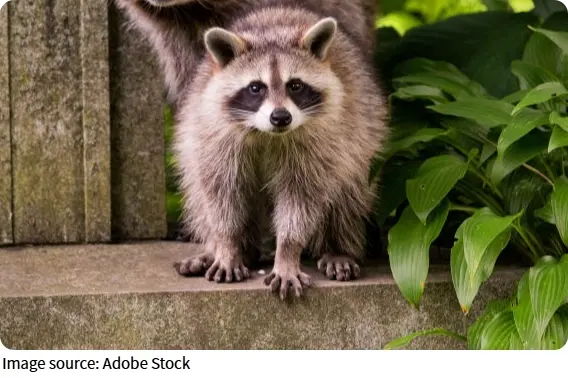
Have you ever walked outside at night and spotted a raccoon digging through a trash bin? It’s not just a funny sight—raccoons are highly intelligent and extremely curious. For them, human garbage is like a treasure chest filled with snacks, and they treat it like an all-you-can-eat buffet.
Their fascination with our leftovers isn’t random—it’s survival instinct mixed with keen problem-solving skills. In fact, urban raccoons have learned to adapt to human habits, timing their foraging to when streets are quiet and people are asleep.
Urban Buffet: Why Garbage Is Irresistible
Raccoons thrive in cities because food is predictable and abundant. While wild raccoons hunt insects, crayfish, and fruits, city raccoons have discovered that humans provide a year-round smorgasbord. Leftover food in bins is easier to access than hunting in the wild, and it’s a concentrated energy source. They even develop “routines,” checking familiar trash spots night after night.
In some neighborhoods, raccoons seem to know which bins are easiest to open or which households leave food out, almost like they have their own city map. Essentially, our garbage is a goldmine, and raccoons are savvy miners.
Hands That Can Do Anything
What makes raccoons truly remarkable is their hands. Unlike most carnivores designed for tearing, raccoons have long, flexible fingers with a touch sensitivity four to five times higher than other mammals. Their paws function almost like human hands—they can grasp, twist, and manipulate objects with precision. This dexterity allows them to open jars, unlatch doors, or tip over containers to reach food. For a raccoon, a trash lid isn’t a barrier—it’s a puzzle waiting to be solved. Some researchers have even compared their ability to untangle objects to a toddler solving a tricky toy puzzle.
Touch, Not Sight: How Paws Lead the Way
Raccoons rely heavily on their sense of touch. Experiments show that they can identify objects and their properties using only their paws. When searching through water for crayfish or clams, their paws help them locate prey even in murky conditions. In urban settings, this sense translates to exploring garbage bins and containers, feeling their way to the most rewarding items.
Their brains dedicate a large portion to processing tactile information, making them master manipulators. Even in complete darkness, a raccoon can open a bin or pry open a lid using just touch and memory—a skill humans would envy.
Problem Solvers of the Animal Kingdom
Studies show raccoons can remember solutions for years and even adapt them to new challenges. For example, one raccoon successfully opened a complex multi-latch container that no other animal could solve. They don’t just repeat learned behavior—they innovate. A raccoon faced with a tricky trash bin might try a new angle, roll the bin, or use a stone to get food.
In fact, in some experiments, raccoons threw small objects to manipulate water levels or dislodge treats, showing creativity and planning. Their intelligence is a mix of memory, trial-and-error, and creative thinking, making them among the cleverest urban wildlife.
Teaching the Next Generation
Raccoons also pass these skills on. Young raccoons observe their mothers learning to access food and practicing safe handling of prey. Even urban raccoons show these learned behaviors when investigating trash or unlocking containers. This “teaching by example” ensures the survival of future generations and strengthens their urban adaptability.
Cubs quickly learn to manipulate objects, climb obstacles, and avoid dangers in human-dominated spaces. By the time they’re a few months old, they can handle a trash bin on their own, proving that dexterity and intelligence are deeply ingrained traits.
Urban Life vs. Wild Life
Raccoons’ success in cities also shows their flexibility. In the wild, they rely on forests and streams, moving carefully to avoid predators. In urban environments, they’ve replaced those challenges with human-made obstacles—garbage lids, fences, and doors. Yet raccoons navigate these effortlessly. They even adjust their foraging habits seasonally, building up energy when food is scarce and shifting to human leftovers when natural sources dry up. Their adaptability demonstrates that intelligence isn’t just about problem-solving—it’s about recognizing opportunity and adjusting behavior accordingly.
The Balance of Curiosity and Risk
While raccoons are fascinating, interacting with them comes with risks. Their adaptability sometimes leads to human-wildlife conflicts. They can carry diseases and parasites, and aggressive or curious raccoons may scratch or bite if cornered. Understanding why raccoons are drawn to human spaces can help us coexist safely—like using secure bins and limiting easy access to food. Observing them from a safe distance allows us to appreciate their skill without endangering ourselves or the animals.
Appreciate Their Cleverness
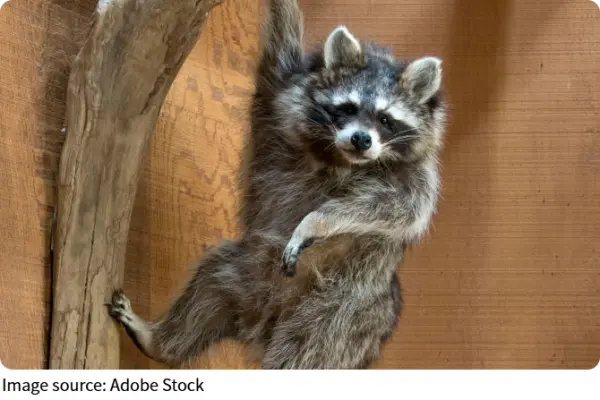
Next time you spot a raccoon exploring a trash bin, don’t just see a nuisance—see a creature with incredible intelligence, dexterity, and adaptability. Their hands and curiosity allow them to survive and thrive in human-dominated landscapes. By observing them, we can marvel at nature’s problem-solvers while learning how to coexist with these clever neighbors. Who knows what new tricks these furry urban acrobats will reveal next? Keep an eye out—Lykkers, city nights are full of surprises!