What Defines a Supercar

Chris Isidore
| 10-03-2026
 · Vehicle Team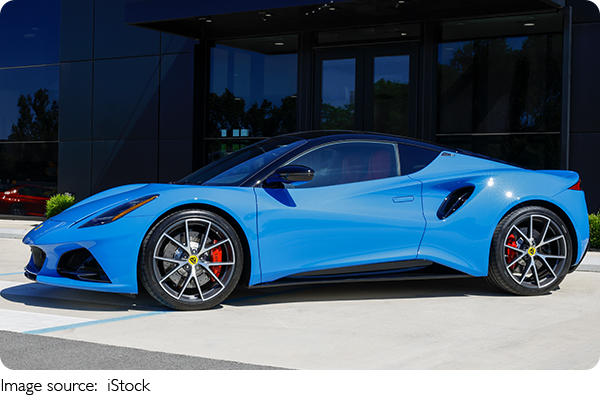
It often happens at a traffic light or outside a café. A low, wide vehicle glides past, and conversations pause for a moment.
People instinctively recognize that the car is something special, even if they cannot immediately name the model. That reaction raises an interesting question: what actually makes a vehicle a supercar rather than just a fast sports car?
The answer is not defined by a single number or specification. Instead, a supercar represents a combination of performance engineering, advanced materials, and distinctive design. When these elements come together, the result is a machine built not only for transportation but also for pushing the limits of automotive capability.
Extreme Performance Capabilities
1. High power output
A defining characteristic of a supercar is its extraordinary engine performance. Many modern examples produce between 500 and 800 horsepower, allowing rapid acceleration that ordinary vehicles cannot match. For instance, the Lamborghini Huracán EVO produces around 631 horsepower from its naturally aspirated V10 engine, enabling it to accelerate from 0 to 100 kilometers per hour in about 2.9 seconds. This level of power requires carefully engineered cooling systems, advanced transmission technology, and strong drivetrain components.
2. Exceptional acceleration
Acceleration is often one of the most discussed metrics when evaluating a supercar. Most models reach 100 kilometers per hour in under 3.5 seconds. The Ferrari 488 GTB, for example, reaches that speed in roughly 3 seconds thanks to its twin-turbocharged V8 engine. Achieving this level of acceleration requires precise traction control systems, aerodynamic balance, and specialized tires designed for maximum grip.
3. High top speed
Another hallmark of supercar engineering is the ability to achieve extremely high speeds while maintaining stability. Many supercars exceed 320 kilometers per hour under ideal conditions. The McLaren 720S, introduced in 2017, reaches a top speed of about 341 kilometers per hour. Similarly, the Ferrari 488 Pista, known for its impressive performance, can reach a top speed of around 340 kilometers per hour. Such performance demands carefully shaped bodywork, active aerodynamics, and suspension systems that maintain control even at very high speeds.
Advanced Engineering and Materials
1. Lightweight construction
Reducing weight is essential for maximizing speed and handling. Supercar manufacturers frequently use carbon fiber and aluminum to build lightweight yet strong structures. Carbon fiber reinforced polymer, often used for chassis components, provides high rigidity while keeping mass low. This material allows engineers to design vehicles that respond quickly to steering inputs while maintaining structural strength.
2. Aerodynamic design
Aerodynamics play a crucial role in supercar performance. Every curve, vent, and air intake is designed to manage airflow efficiently. Rear wings, diffusers, and side channels guide air around the vehicle to increase downforce. Downforce presses the car onto the road surface at high speed, improving stability and grip during cornering.
3. Precision handling systems
Supercars rely on sophisticated suspension systems and advanced electronic controls. Adaptive dampers adjust suspension stiffness based on driving conditions, while performance braking systems allow drivers to slow down quickly and safely. Many modern supercars also include carbon-ceramic brake discs, which provide strong stopping power and resist heat during repeated high-speed braking.
Distinctive Design and Exclusivity
1. Unique visual identity
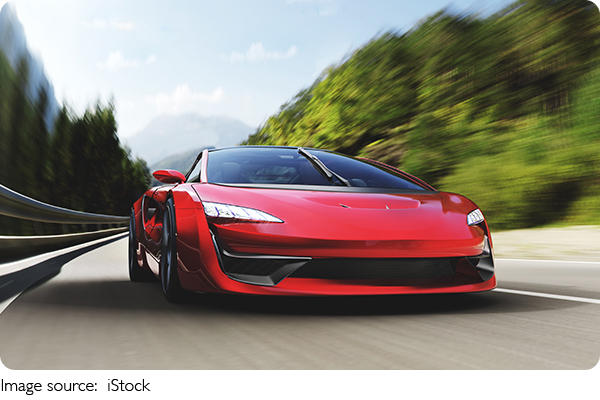
Supercars are designed to stand out immediately. Their bodies sit low to the ground, often with dramatic lines, wide air intakes, and distinctive lighting signatures. This visual identity is not only aesthetic; it also reflects aerodynamic function. Many designs originate from wind tunnel testing, where engineers refine shapes to reduce drag and improve airflow.
2. Limited production numbers
Unlike mass-produced vehicles, supercars are often manufactured in relatively small quantities. This exclusivity helps maintain the uniqueness of each model and allows manufacturers to focus on craftsmanship and advanced technology. Limited production also contributes to their appeal among collectors.
3. Driver-focused interiors
Inside a supercar, the layout usually centers around the driver. Controls are positioned for quick access, seats provide strong support during cornering, and digital displays show performance data such as lap timing and engine output. While comfort features may exist, the primary goal remains driving performance.
The idea of a supercar goes beyond numbers printed on a specification sheet. It represents a moment when engineering ambition meets design creativity. Every vent, curve, and mechanical component serves a purpose, shaping a vehicle capable of delivering extraordinary driving experiences.
Seeing one glide down a street reminds us that engineering can also inspire emotion. For a brief second, people stop talking, turn their heads, and simply watch it pass. That quiet reaction may be the clearest sign that a machine has crossed the line from ordinary transportation into the world of supercars.