Home Flower Arranging

Raghu Yadav
| 27-02-2026
 · Photography Team
A fresh bouquet can instantly lift a room, but arranging flowers at home doesn't have to feel complicated. With a few simple techniques, you can turn any bunch into a beautiful display that feels curated and lively.
Whether you're placing flowers on the dining table or a sideboard, small adjustments make a big difference in how your arrangements look and last.
Choose the Right Flowers
Selecting the right flowers is the foundation of a striking arrangement.
1. Mix textures – Combine soft blooms with structured stems for visual interest. For instance, pairing delicate daisies with tall greenery adds depth.
2. Consider longevity – Some flowers last longer than others. Carnations and chrysanthemums often maintain their beauty for over a week, giving you more time to enjoy your display.
3. Match colors to your space – Use shades that complement your room's palette. Soft pastels suit calm spaces, while vibrant tones energize a living area.
Tip: If you're unsure, start with a primary color and add one or two accent shades to avoid clashing.
Prepare Flowers Properly
Proper preparation ensures flowers stay fresh longer and look their best.
1. Trim stems – Cut stems at a 45-degree angle under running water to maximize water absorption.
2. Remove excess leaves – Leaves below the waterline can rot, reducing the lifespan of your bouquet.
3. Condition flowers – Let them rest in fresh water for an hour before arranging to revive any wilted petals.
Example: When arranging roses, remove any leaves touching the water and recut stems before placing them in a vase. This simple step keeps them vibrant for days.
Use the Right Vase
The vase is as important as the flowers themselves.
1. Match scale – Ensure the vase size complements the bouquet. Tall flowers need tall vases for balance.
2. Clear vs. opaque – Clear vases show stems, which can add texture, while opaque vases emphasize the flowers themselves.
3. Stability – A heavy base prevents tipping, especially for larger arrangements.
Actionable tip: For a small table arrangement, choose a short, wide vase. It allows you to fan the flowers outward, creating a fuller look without overcrowding.
Layering and Placement
How you place flowers affects the overall appeal.
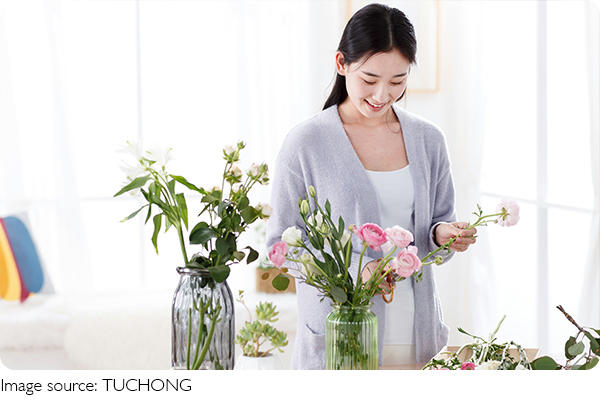
1. Start with greenery – Use leaves and branches as a base to provide structure.
2. Add focal flowers – Place the largest or most colorful blooms centrally for impact.
3. Fill gaps with smaller flowers – Tiny blossoms or buds fill spaces and soften edges for a natural appearance.
Example: Begin with eucalyptus stems for height, insert lilies in the center, then add small sprays of baby's breath around the edges. The arrangement feels balanced and professional.
Maintenance Tips
Keeping flowers fresh extends the life of your display.
1. Change water regularly – Refresh every two days to prevent bacteria growth.
2. Re-cut stems – Trim slightly each time you change water for maximum hydration.
3. Remove wilted blooms – Faded flowers can drag down the overall look and reduce freshness of nearby stems.
A simple habit: Keep a small spray bottle nearby to mist petals lightly, especially in dry indoor environments. This extra moisture keeps delicate blooms vibrant longer.
Arranging flowers at home can be a fun, creative routine that brings beauty and freshness into your space. By choosing the right blooms, preparing them properly, selecting suitable vases, layering thoughtfully, and maintaining them, you can create displays that feel both effortless and elegant. With a little practice, these small techniques can transform ordinary bouquets into striking arrangements that brighten any room.