African Wildcats

Ravish Kumar
| 13-02-2026
 · Animal Team
Dusk settles over dry grasslands, and movement begins where daylight once felt empty. A small striped cat steps lightly between shadows, pausing often, listening more than looking.
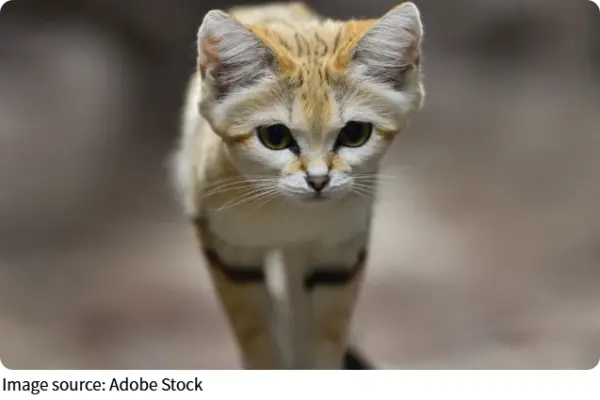
This is the African wildcat, a shy hunter whose calm presence shaped the story of the modern house cat.
Though rarely seen, its behavior reveals how patience, awareness, and balance help small predators survive in wide open landscapes.
Where African wildcats truly belong
Open terrain, hidden shelter, steady climate
- Landscapes that favor silence
African wildcats thrive in savannas, scrublands, and semi-dry plains where low vegetation allows clear sightlines. These environments help them detect movement quickly while still offering enough cover to disappear when danger approaches.
- Resting places that stay concealed
During daylight hours, they often shelter inside abandoned burrows, dense shrubs, or rocky gaps. Cool, shaded hiding spots protect them from heat and reduce the chance of being noticed by larger predators.
- Adaptation to changing seasons
Their range includes areas with shifting temperatures and rainfall. Flexible movement patterns allow them to follow food sources or retreat toward safer ground when conditions grow harsh.
Actionable example:
When observing wildlife in open habitats, move slowly and pause often. Stillness increases the chance of noticing subtle motion rather than startling animals into hiding.
The link to modern house cats
Shared features, gentle temperament, ancient partnership
- Nearly identical appearance
African wildcats look remarkably similar to common tabby cats, with sandy-gray fur, faint stripes, and a ringed tail. This resemblance reflects direct ancestry rather than coincidence.
- Natural tolerance of human presence
Compared with many wild felines, they show lower fear toward distant human activity. This calm disposition likely allowed early farming communities to coexist with them, beginning a long relationship.
- Gradual path toward companionship
Over generations, individuals comfortable near stored grain and small prey animals benefited from reliable food. Humans, in turn, gained quiet pest control, forming a partnership without force.
Actionable example:
Notice how trust between animals and people usually develops through repeated calm exposure rather than sudden contact. Patience shapes lasting bonds.
Hunting style built on patience
Careful listening, slow approach, precise timing
- Sound before sight
Large ears rotate to capture faint rustling in grass or soil. Detecting movement through hearing allows accurate targeting even in low light.
- Movement measured in inches
Instead of chasing immediately, the wildcat creeps forward in tiny steps, freezing whenever the surroundings change. This energy-saving strategy improves success.
- Short bursts of speed
When distance closes, a rapid leap ends the pursuit within seconds. Efficiency matters more than endurance for a small solitary hunter.
Actionable example:
Watch a domestic cat playing with a toy dragged slowly across the floor. The stalking posture closely mirrors the ancient technique used by its wild ancestor.
Daily rhythm of a solitary survivor
Night activity, wide territory, minimal conflict
- Life after sunset
African wildcats become most active from evening through early morning. Cooler temperatures and reduced competition make nighttime movement safer.
- Large personal space
Each individual patrols a broad territory marked with scent and visual signals. Spacing reduces encounters and preserves food resources.
- Quiet avoidance over confrontation
Rather than fighting, they usually retreat when sensing another predator. Survival depends on caution, not dominance.
Actionable example:
If you track wildlife signs such as footprints or resting spots, record locations over time. Patterns often reveal the size and shape of an animal's range.
Why protection still matters
Habitat pressure, hybridization risk, ecological balance
- Shrinking natural spaces
Expanding agriculture and settlement reduce the open land these cats rely on. Fragmented habitat forces them closer to roads and human conflict.
- Mixing with domestic cats
Interbreeding can blur the genetic identity of true wild populations. Protecting natural groups helps preserve the original lineage of the species.
- Role in controlling small animal numbers
As mid-level predators, African wildcats help maintain ecological balance. Losing them could allow certain prey populations to grow unchecked.
Actionable example:
Support conservation areas or responsible land management projects that maintain connected natural habitats rather than isolated patches.
A glimpse of an African wildcat rarely lasts more than a few seconds—just enough time to see striped fur fade back into grass. Yet that brief moment carries a deeper realization. The familiar house cat sleeping on a windowsill shares its roots with this quiet survivor of open landscapes. Understanding that connection turns an ordinary purr into an echo of distant wild places, reminding us that even the most common companions still carry stories shaped by wind, silence, and starlit ground.