Paragliding: First-Time!

Pankaj Singh
| 30-01-2026
 · Sport Team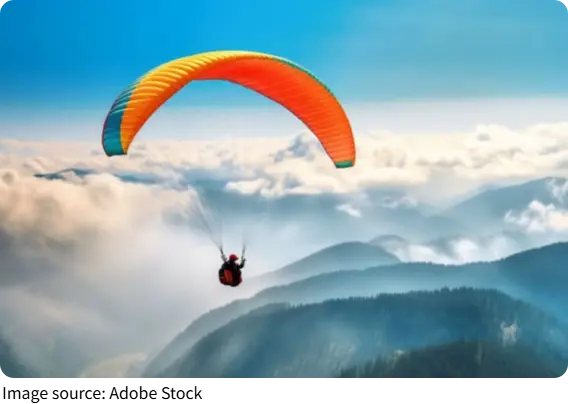
Paragliding is often described as one of the purest forms of human flight, yet beginners sometimes underestimate its technical depth.
While the equipment appears minimal—a wing, harness, helmet, and reserve parachute—the real foundation lies in judgment, timing, and environmental awareness.
Unlike skydiving, paragliding relies entirely on natural airflow and terrain features. First-time flyers must understand that success is not about bravery, but about preparation and respect for aerodynamics and weather behavior.
Training Is Non-Negotiable
No amount of online videos can replace structured instruction from a certified paragliding school. Professional training teaches ground handling, wing control, launch techniques, and emergency procedures in a progressive manner. Beginners often struggle most with controlling the wing on the ground, known as kiting.
This skill is critical because it builds sensitivity to wind pressure and balance before leaving the ground. Solid training dramatically reduces accidents and instills habits that stay with pilots for life.
Choosing the Right Wing and Gear
Beginner pilots should always fly wings certified for entry-level use, often labeled EN-A or equivalent. These gliders are engineered for stability, forgiving reactions, and slower speeds, making them ideal for learning. Flying an advanced wing too early increases risk and slows real progress. Harness comfort is equally important; an ill-fitting harness can affect posture and control inputs.
Weather Awareness Is Your Best Defense
Weather literacy separates safe pilots from reckless ones. First-time flyers should limit flights to calm morning or late afternoon conditions, when thermal activity is minimal. Strong midday thermals, gust fronts, or approaching storms can overwhelm beginners. Learning to interpret wind direction, cloud formation, and forecast models builds decision-making confidence. If conditions feel questionable, walking away is always the correct choice.
Mastering Launch Techniques Early
Launching is one of the most critical phases of paragliding. A clean, controlled takeoff requires precise coordination between wing inflation, body position, and timing. Beginners often rush launches, leading to asymmetric wing inflation or loss of control.
Practicing forward and reverse launches in light wind conditions improves muscle memory and reduces stress during actual flights. A stable launch sets the tone for the entire flight, while a poor one compounds problems quickly.
In-Flight Control and Awareness
Once airborne, first-time pilots should prioritize stability over exploration. Smooth, minimal control inputs keep the wing efficient and predictable. Overcorrecting can lead to oscillations or collapses, especially in turbulent air. Maintaining proper airspeed, monitoring surrounding traffic, and scanning terrain continuously are essential habits.
Landing Is Where Discipline Pays Off
Landings account for a significant number of beginner injuries, often due to misjudged approach angles or rushed decisions. Planning a landing pattern early allows pilots to adjust altitude gradually rather than react at the last moment. Wind direction must always be confirmed before final approach.
Mental Readiness and Emotional Control
Paragliding challenges the mind as much as the body. First-time flyers may experience adrenaline spikes, fear, or overconfidence, sometimes all in one flight. Recognizing emotional states helps prevent impulsive decisions. Pilots should fly within their comfort zone, expanding skills gradually rather than chasing dramatic experiences. Confidence grows through repetition and consistency, not risk-taking.
Learning From Every Flight
Post-flight reflection accelerates improvement. Reviewing weather conditions, launch quality, wing behavior, and landing outcomes helps identify patterns and areas for growth. Flying with experienced pilots or joining a local paragliding community provides mentorship and shared knowledge that books cannot offer. Paragliding is a discipline where humility fosters longevity.
Paragliding rewards those who approach it with patience, discipline, and curiosity—and once your feet lift from the hillside and the landscape opens beneath you, the quiet thrill of controlled flight becomes something you will always want to return to.