Rocket Into Space

Chandan Singh
| 19-12-2025
 · Astronomy Team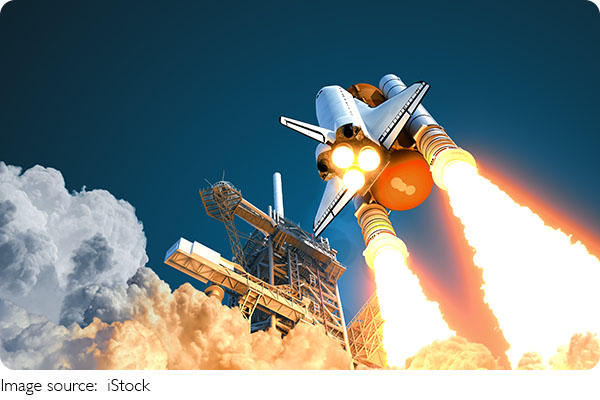
When we watch a rocket rise slowly from the launch pad and disappear into the sky, we often feel both excitement and curiosity. How can such a massive machine leave the ground and travel far beyond our planet? Today, we walk through the full story together.
We will explain rocket launching in a clear, daily, and easy way, step by step, so we can truly understand what happens from ignition to orbit.
What a Rocket Really Is
We can think of a rocket as a flying machine that moves forward by pushing hot gas backward at very high speed. This backward flow creates a strong reaction force that pushes the rocket upward. Unlike many aircraft, a rocket carries both its fuel and the substance needed to help it burn. Because of this, we can launch rockets not only within the atmosphere but also far beyond it, where air no longer exists.
Why Rockets Do Not Need Air
One key point we should understand is that rockets do not rely on air around them to keep moving. Everything needed for the burning process is already inside the rocket. This design allows us to send objects into space, where there is no oxygen. As the rocket flies, its fuel is used up, and its total mass becomes smaller. This change in mass plays a major role in how fast and how far the rocket can go.
The Countdown and First Moments
When a launch begins, we start with a countdown at the control center. At zero, the first engine ignites. We hear a powerful roar, and the rocket slowly lifts off. This is the beginning of the acceleration phase. In the first few seconds, the rocket moves straight up. Soon after, it gently turns toward its planned direction, guided by a carefully designed program.
Stages Working One After Another
Most rockets use more than one stage. After about one to two minutes, the first stage finishes its job and separates. The next stage then ignites and continues pushing the rocket higher and faster. By this point, the rocket has already moved beyond the thickest part of the atmosphere. Protective outer covers are released because they are no longer needed. Each stage helps the rocket gain more speed efficiently.
Reaching the Planned Path
When the final stage finishes accelerating, the rocket has reached its planned height and speed. At this moment, powered movement stops, and the rocket continues moving forward using the energy it has already gained. Later, a short final push adjusts the path precisely. Once the correct speed is reached, the engine shuts down, and the mission of the launch vehicle is complete.
What Controls the Final Speed
We often ask what decides how fast a rocket can go. Two main factors matter most. The first is how fast the exhaust gas is pushed out. The second is the mass ratio, meaning the difference between the rocket’s mass at launch and its mass after fuel use. Higher exhaust speed and a well-planned mass ratio allow the rocket to achieve greater final speed.
Why We Use Multiple Stages
It might seem helpful to add more stages, but more is not always better. Each added stage makes the structure more complex. Complexity can reduce reliability. Engineers carefully balance performance and safety. Using several stages allows the rocket to reach the required speed while keeping the design practical and dependable.
The Science Behind the Push
At the heart of rocket motion is a simple rule of physics. When gas shoots backward at high speed, the rocket must move forward. This idea also appears when water flows out of a bent pipe and the pipe moves the other way. By controlling this backward flow, we gain the forward motion needed to reach great speeds.
Where Rockets Are Used Today
Today, rockets help us send satellites into orbit, explore space, and support scientific research. They are also used as powerful boosters for other flying systems. As of now, rockets remain the only tools capable of helping objects overcome Earth’s gravity and travel into outer space.
A Shared Curiosity to the Sky
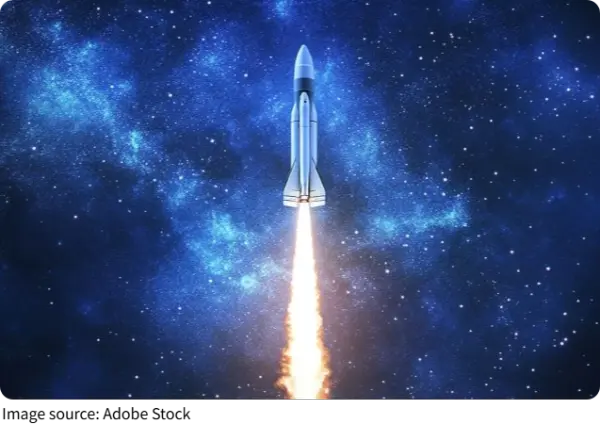
Lykkers, every rocket launch is a combination of careful planning, precise timing, and clear scientific rules. When we understand each step, the launch becomes more than a dramatic scene. It becomes a story of knowledge and teamwork. Next time we watch a rocket rise, let us remember that behind the flames and noise lies a simple idea: push back, move forward. And together, we keep looking up, curious about what comes next beyond the sky.
Rockets 101 | National Geographic
Video by National Geographic